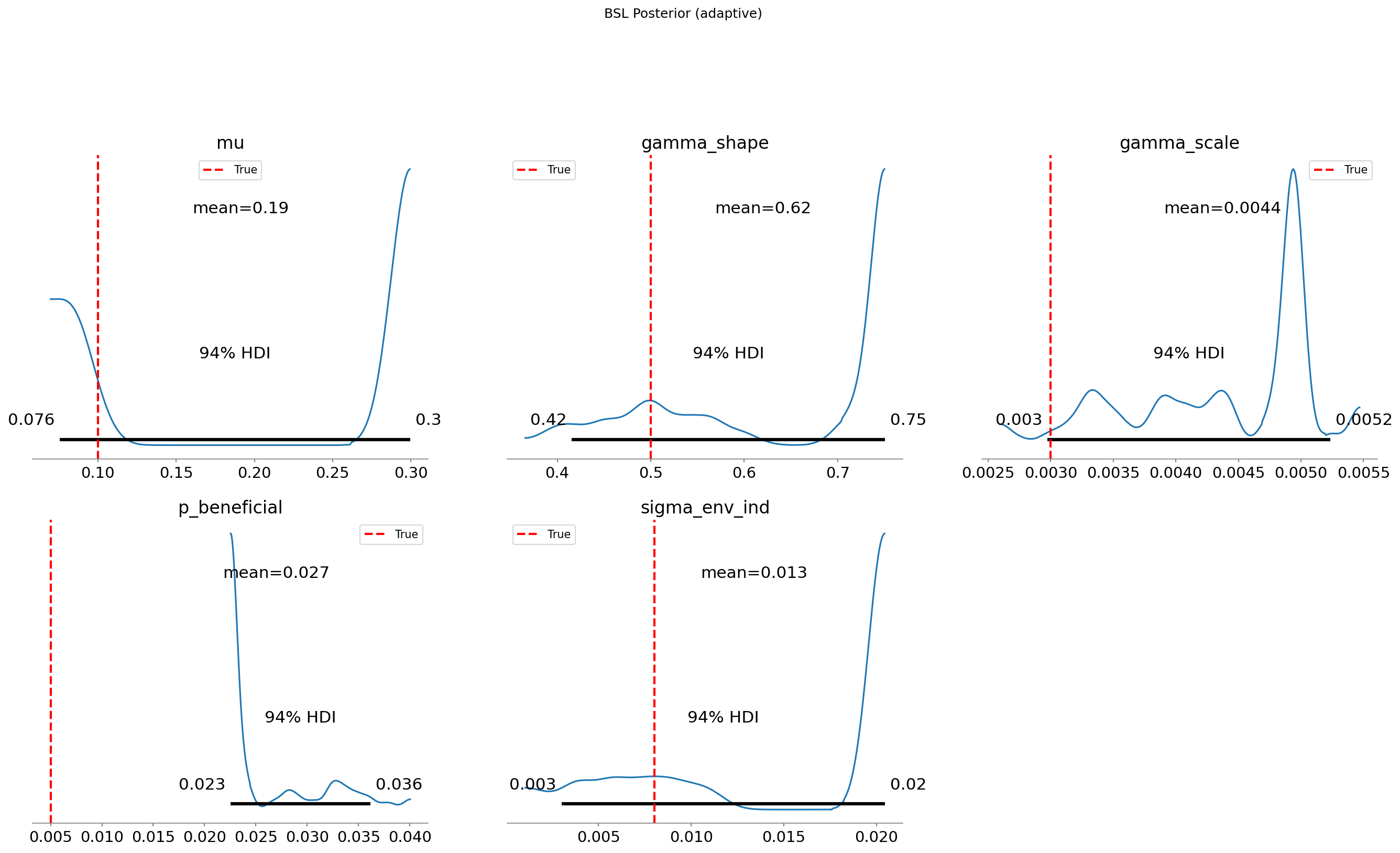
Figure 1: Marginal posterior distributions from adaptive BSL.
Each panel shows the posterior distribution for one of the five inferred parameters.
Red dashed lines mark the true parameter values used to generate the synthetic data.
Reading these plots biologically:
Reading these plots biologically:
- mu (mutation rate): The posterior for mu tells us how confidently we can estimate the per-offspring mutation rate from population fitness data alone. A tight peak near the true value (0.1) means the fitness trajectory is highly informative about mutation rate — which makes biological sense, since mutation rate directly controls the rate of fitness change in d(m̄)/dt ≈ Var(m) + μ · Eg[s] · b̄.
- gamma_shape (DFE shape): Values below 1.0 indicate an L-shaped distribution of fitness effects, where most mutations have small effects but a heavy tail of large-effect mutations exists. The posterior width here reflects how well the data distinguishes between different DFE shapes.
- gamma_scale (DFE scale): Together with gamma_shape, this determines the mean deleterious effect (shape × scale). The posterior may show correlation with gamma_shape, since different shape/scale combinations can produce similar mean effects.
- p_beneficial: The fraction of mutations that are beneficial. This is typically the hardest parameter to pin down because beneficial mutations are rare (0.5%) and their signal is small relative to the dominant deleterious mutation load.
- sigma_env_ind: Environmental noise on fitness expression. This parameter captures non-genetic variation in fitness and can partially trade off with genetic variance in the summary statistics.
- n_sims=50 — 50 simulations per likelihood evaluation, controlling the variance of the synthetic likelihood estimate
- chunk_size=10 — simulations are processed in batches of 10 on the GPU to manage memory usage
- n_warmup=200, n_samples=500 — 200 burn-in steps discarded, 500 posterior samples retained
- n_chains=2 — two independent chains for convergence assessment
- 4 adaptation phases — the proposal distribution is tuned in 4 phases of 40 steps each